
Design at Scale™
Find what’s really holding your design team back from becoming an integrated design function in your organisation.
At the intersection of design thinking, service design, human-computer interaction and product design development is the unique spot of a functionally integrated design leader. No politics, no buzzwords, no jargon, no extra meetings, no manipulation — a pure, clean, data-driven decision-making business foundation that allows creative minds to shape the future of the organisation through design.
Design at Scale™ is a Master Class that turns product assumptions, symptoms, and competing opinions into justified, practical actions that anyone in the business can act on.
The critical distinction in future design delivery in your organisation is not about design talent or resourcing capabilities. It is about defining a design function that changes the entire organisation through broadcasting without losing ownership, reach, or business impact. Enabling organisational experimentation under the safety guardrails in a newly established Design Operating System reflects on the maturity and decision capability in an exponential organisation:
Design Value
— Effective (Creative) Communications
— Integrated (Design) Ownership
— Transparent Product Design Delivery
— Synchronised Design OS
Organisation Value
— Operational Cost Savings
— Reduced Time to Market
— Partners Risk Reduction
— Maintaining High Status
For Practitioners
We Make
An individual class for design leaders, managers, and design directors who shape their design function in their organisation.

£2500
£990
09 x 45min session in a month
MOBILISE – Personal Foundations
OPERATE — Systematic Design Leadership
ACCELERATE – Automating Design Delivery
BOOK & JOURNAL – Free Assets
All ASSETS from Design at Scale
20 x Design Leadership Modules
For Organizations
We Transform
A program designed for organisations that are looking to adopt or transition their design team to a product design function delivery model.
£25,000
£9,900
9-week engagement (10days)
MOBILISE – Team Design Foundation
OPERATE – End-to-End Design Integration
ACCELERATE – Operational Excellence
BOOK + JOURNAL – Free Assets
All ASSETS from Design at Scale
20 x Design Leadership Modules
Problem Definition
The work is moving.
The design is not.
Running a successful Product Design Team under SDLC:
— The product work is happening.
— The roadmap and planning are moving.
— Research and copy have been consolidated.
— Flows and user journeys are being defined.
— Features are shipping based on Excel.
But something feels off:
— The sales team is still explaining the basic functionality.
— Customers moved on to a new feature without warning.
— The work is not improving team trust in the org.
— Conversion and adoption are weaker.
— The same questions keep returning.
A plausible explanation we often come to:
— Have a follow-up meeting.
— Come up with another hypothesis.
— Rewrite the original brief or redesign.
— Let’s build/introduce more features.
— My favourite: Initiate more experiments.
Financial Implication of passive inactivity:
— The operational cost isn't spent.
— The time of not building the right thing.
— The meetings generating more decisions.
— The promises of revenue arriving later.
— The lost learning that hasn't been integrated.
Regrettably, there isn't one obvious explanation:
— The customer profile could be wrong.
— The journey is too complicated.
— Weak product that needs to build trust.
Traditionally, we tend to focus outwards:
— until we realise none of them is actually under our control.
— the business works as a system under operating procedures.
— connects the dots and establishes a transparency layer.
— for faster experimentation and flawless integration.
Factors
The next decision goes 1 of 3 ways.
01 — Debate
— Internal debate
— Circling via departments
— Evidence without impact
— Shared Responsibility
— Zero Accountability
02 — Delegate
— Redistribute all Tasks
— Start Small and Scale
— Act More Locally
— Share findings
— Cumulative Progress
03 — Clarify
— One Language
— One Location
— One Team
— One Product
— One (Shared) Direction
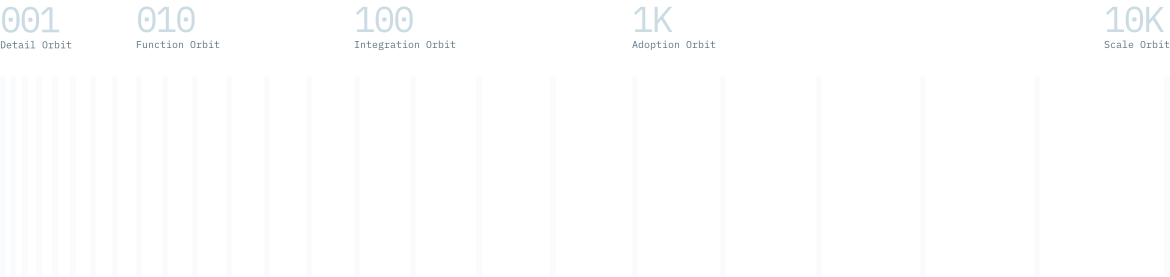

Each of the 9 engagements produces practical, implementable, and sustainable output.
Together, we shape the foundation that gets the business moving forward.
Evaluation Matrix
A private diagnosis of you and your organisation: why the visible symptoms aren't appearing together, what is blocking progress, and what we need to act on first—a summary that serves as a map to navigate the organisation without losing direction.
OnUs session helps us discuss the findings together, unwrap hidden themes, and stress-test the direction. Leaving you with a shared output on what deserves your attention and how to approach it.
Memo
The report gives you the foundation.
The call helps you understand.
The debate prepares you for what lies ahead.
The decision takes you forward.
Together, we turn uncertainty into clarity.
A decision that shapes your organisation through design.
Each of the 9 engagements produces practical, implementable, and sustainable output.
Case Study
From 9 months of delays to launched in 9 days.
An average SDLC design integration is 12 weeks. This gives the team the ability to standardise and operationally integrate with the rest of the team and the organisational unit. With a specific lens, we/you can adjust it in a fraction of the time.
Read Clarity Report
A Design at Scale has been relentlessly tested in verticals like Automotive, Aviation, Broadcast, Fintech, Media, and Retail, and in environments like start-ups, scale-ups, and enterprise in-house teams. Many participants were asking whether the agreement sits with leadership or operational delivery. The Academy found a fundamental commonality among businesses: while they focused solely on customer journey transformation, the most common competitive advantage was de-risked managed delivery.
Once the foundation is successfully integrated, the team can effectively double delivery speed. This is reflected in a 5x increase in capability in controlled testing and functional integration of the design system, which became a guiding principle for the data architecture of the newly established Operating System.
OnUs session helps us discuss the findings together, unwrap hidden themes, and stress-test the direction. Leaving you with a shared output on what deserves your attention and how to approach it.
Testimonials
I'm very grateful to have worked with Jiri, he's highly professional, extremely organised and very talented. Above all, Jiri is a great human being who is very supportive, always bringing motivation, positive energy and good vibes to the table no matter how difficult the challenge is. I would recommend Jiri anytime; he's a problem solver, a good spirit and a superb team player.
— David Carvalho, VP — Creative Director
How it works
No kickoff theatre,
A simple, transparent flow.
Our engagement is tandem-based collaboration established by the MBA HB Programme, modified for Design Executives. After intake, we decide the pace. It has to sit right with you and your business: 3 frameworks, 3 workshops, and 20 complementary modules, all aligned to one direction. Everything we generate is yours to accelerate your role in the organisation.
01
Mobilise
Don't overthink it—a simple maturity assessment that generates output only you’ll see. Sessions are mainly focused on Communication, Business, and integrated Research.
02
Operate
Applying senior product expertise, we isolate the exact point where your product or strategy lacks impact and reframe it for better integration. Sessions cover Copy, CX, and UI.
03
Accelerate
Complete the package with a holistic overview of exponential organisation, what matters most, and the clearest next move with Dev, Releases and Product Integration.
Tailored, affordable, and precisely dedicated to your cause.
Design
Maturity
Matrix
Six steps to evaluate the maturity of your design team in your organisation. This helps us identify whether you can scale the design function for sustainable growth through strategic alignment or progressive change. The Maturity considers states as: not present, reactive, structured, integrated, scaled, on (systematised).
What it’s for
Clarity
A well-captured design foundation in accessible forms creates more clarity than any planning deck.
Believe
Shared values and beliefs attract more like-minded talent to an exponential organisation.
Trust
Well-distributed trust across the team members and leaders drives the best decision forward.
Direction
The compass was invented before the clock. It is better to stay on the right course than be on time with the wrong one.
Discipline
The character and culture of an organisation is defined by the most mundane tasks it has to perform.
Determination
The right culture is not built on occasional judgment; it is built on relentless persuasion of belief.
The Author

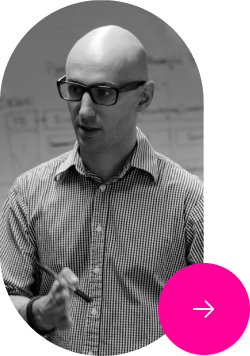
For over two decades, our clients see the patterns others miss – we turn design complexity into a clear advantage.















Testimonials
Jiri applies a rare combination of focus and creativity which puts the end user experience at the forefront of everything he does. This benefits the business and also helped me personally to perform at my top level as a product manager. His good nature and pragmatic approach to design made my products better than I had initially envisaged and his experience of technical implementation meant he was as great an asset at the UX stage as he was when it came to development and delivery. I would highly recommend Jiri as a colleague and a mentor and would hope to work with him again in the future.
— Cliff Jones, Product Lead, Copilot at Microsoft
Frequently Asked Questions over chat or discovery calls.
FAQ.
Reactive — delivery responds to random tasks, and fulfilment feels chaotic, with little impact. The design team is looking for a mobilised approach that delivers consistency and predictability.
Structured — the team have the basics covered, and work gets done. Too many meetings, defined silos, and heavy politics prevent operational excellence from integrating.
Scaled — design delivery is smooth and fully integrated, and the design team is looking to accelerate design impact beyond fully automated internal delivery.
Some have no designers at all, and some manage a 40-80 member team. These challenges are proportionally different. Having a design leader in the same room will be disrespectful.
There are essentially three stages and areas I/we help.
Mobilise — you are starting or redefining how design is done in your organisation.
Operate — you are growing, with some setbacks from meetings, silos, and politics.
Accelerate — you are fully operational and integrated, and you're looking at what’s next.
I make 45mx 9 = 1 day
We transform 1d x 9 (+summary)= 10d (over 9 weeks)
+5k
Mentees in DaS™
Academy since 2012
+50
In-company design academies for the finance sector
26%
Reducing the risk in regulated environments
17%
Upskilled the design function using POM
72%
Of the mentees achieved their career goal
£9M
Saved in cross-team integration since 2010
3x
Faster to market without affecting the main team
90
Design Directors as cross-sector direct contributors
Do not TAKE
our WORD for it.
Like-minded minds that share the same passion for orchestrating and documenting design decisions and shaping their organisation through design.
Design
at Scale™
Categories
Data
Share
Internal
Collaborate
Resources
IBM PlexSan
Regular
Charcoal
Design at Scale™ is defined by three models, which form the Method. Each model operates in a different part of the business and collects and informs parties on design and engineering decisions that have a direct impact on the delivery.
All brands and trademarks presented on the Design at Scale™ website are owned by their relevant companies or agencies. The projects represent collaborations between designers, developers and product owners. Do not copy or publish any of the projects shown here without written approval from Design at Scale™ (alternatively GIVE™, 9V™) and/or relevant companies and agencies.


