
DaS™ – The Shift
We build the FUTURE on CLARITY.
When Jacques Derrida was seeking clarity in the 1960s, he began to question fundamental conceptual hierarchies and binary oppositions (e.g., speech/writing, structure/order, hierarchy/dependency, nature/culture). He laid the foundation for Deconstructivism, a philosophical approach devoted to deconstructing a topic to its essence.
If all the methods and processes in design are just an evolution of the previous one, are we really achieving radical simplification in a complex environment that no longer serves our purpose?

The Design Maturity Matrix is a simple, eyes-only assessment of how well your organisation integrates design function. You can apply it by yourself. Alternatively, you can reach out for help.
Mobilise
The Shift
The basis of a modern delivery is often tainted with one process or another. Marking that one could be better than the other for a specific desired outcome. You wouldn’t choose the soup recipe to bake a cake, yet many people choose the one method over another simply because they believe it is the right one.
The basis of all methods comes down to the stage-and-gate approach. Stage defined the process of forming an idea, trying to give shape or form to mud, for example. And gate: where we consciously decide that whatever form or shape we have achieved is good enough for our next iteration of the final presentation.
Stage and Gate can be experienced in Double Diamond, Agile, LESS, PRINCE2, or any of the 274 methods that span design and delivery. Even choosing the colours, shape, form, or layout is a stage-and-gate process. What is more important to today’s design is the context under which the “gate“ happens.
Outsourced
Did you make a decision in a silo, without the core team or the client in the room? Did you have enough information or diamonds to make an informed decision?
Peripheral
Potentially, you are part of the delivery team, and you are well-connected to the central team that finds the way to inform you about all changes that are happening to the core business.

Central
Or perhaps you are in the central team, and you are indeed dictating how things will be used and what impact they will have on the proposal or the organisation itself.

Itegrated
Ideally, you'll arrie to conslusoin that there is no one method, but a method of methods that we call a paradigm that allows some businesses to move faster than others.
62%
Impact of non-standardised communication in a 1k organisation
34%
Multiple locations impacting congnitive load and focus
27%
Teams are often assigned to multiple projects
32%
Revenue lost due to non-design task forces.
21%
Time assigned to locating correct infomation
18%
Time assigned to copying from one resource to another
43
Avarege amount of passwords to fulfiull the design task
82%
Meetings have no agenda, respisibilities or outcome
Problem
Framing.
The challenges often arise when the organisation starts focusing on flipping rather than scaling.
The main signs are that you cannot make an autonomous decision while constantly waiting for approvals; everything is measured in time increments; and leadership spends time on strategy and vision instead of defining the Product Reference Document.
Sustainable
What is Scaling
Originally adopted from engineering, the term is now commonly misused to describe business growth. Phrases like “the company scaled 10x”, “we scaled the department”, or “our company provides recruitment at scale” are everywhere. But scale and scaling are two different things. We are here to “scale the design function,” reflecting the agility and adaptability of the design team within a particular organisation, fulfilling ongoing demands, and documenting (and broadcasting) design decisions that enable faster, wiser adoption over time.
Design at Scale™ addresses the growing demand for design function in forever-changing, non-design environments.
Artificial
What is flipping
The difference between sustainable scaling through design, which is what Design at Scale™ refers to, and artificially increasing the market share value of a business is the following. Founders artificially inflate market share to attract a buyer, triggering what’s often called a capital event or a liquidity event: cashing out. Flipping, in this instance, is about the unsustainable exhaustion or manipulation of design function — or any other internal function — over a short period of time to achieve a marginal gain by cashing out of the artificial value of the organisation or agency.
Flipping deliberately exhausts organisational resources to gain a short-term evaluation that damages the business's long-term value.
Note: The reason these two approaches are so often confused in the media is that flipping can sometimes outpace even exponential growth — in the short term.
Canvas
Mobilisation
Before you can scale anything, you have to scale yourself. Respectfully, nothing comes from the outside. If you are an athlete, it does not matter how many techniques you know — if you do not train, you will not be able to apply them when it matters.
The Mobilise section helps you get ready for the race that puts you and your team into — where designing feels like play, but with a serious business impact. Together, we’ll answer the questions that no one has probably asked you before: on your routine, mornings, retrospective, planning, accountability, relationships, quality, fear, stress, procrastination, and purpose. I promise it will be worthwhile.
Framework
Operation
The Operations section takes a different shape. We’ll look at Proposition Shaping — what we cannot afford to miss when defining the product or service. Design Shaping — how best to validate the idea and test it in a real environment before handing it over to our engineering colleagues. Refinement — which helps us structure all assets for delivery. Product Delivery and Show and Tell — which shows us how best to support our engineering colleagues.
And, finally, how can we integrate design functions to enable the business to make informed decisions at scale, and improve between releases and across multiple integrations?
Method
Acceleration
One of the most significant aspects of scaling design is acceleration. You can have as many methods and processes in place as you like — but if you do not know when and how to use them, the impact you are looking for will never arrive. We describe this as a state of FLOW. The state in which, regardless of what is thrown at the design function, the decision-making and creative engine can handle it without incurring time delays, emotional strain, or physical damage. It’s handled with grace and professional courtesy. The entire team remains resilient and robust by redistributing the impact across all participants. The teams sustainably scale the impact within the organisation.
For Practitioners
I make
An individual program for design leaders, managers, and design directors who shape their design function from scratch. Do not hesitate to roll up your sleeves and make adjustments, tweaks, and internal validation with your own team — for design leaders who dare to scale. You challenge + our experience.
This is a 09 x 45min session over 9 weeks.
For Organizations
We Transform
A program designed for organisations that are looking to adopt or transition to a product operating model. Whether you are an agency supporting an in-house design team, brand, or marketing, transparency is everything. We tailor the proposition to your product environment.
12 weeks minimum engagment.
Academy
Design is on it’s pivotal point. Speed, strategy, thinking, craft, complexity, systemisation and the overall integration made design function 20x faster than 30 years ago. What is the next generation of design?
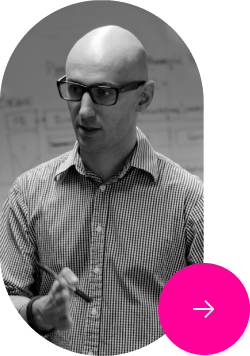
Design at Scale™: How Individuals Shape Future Organisation Through Design
Design at Scale™

Categories
Data
Share
Internal
Collaborate
Resources
IBM PlexSan
Regular
Charcoal
Design at Scale™ is defined by three models, which form the Method. Each model operates in a different part of the business and collects and informs parties on design and engineering decisions that have a direct impact on the delivery.
All brands and trademarks presented on the Design at Scale™ website are owned by their relevant companies or agencies. The projects represent collaborations between designers, developers and product owners. Do not copy or publish any of the projects shown here without written approval from Design at Scale™ (alternatively GIVE™, 9V™) and/or relevant companies and agencies.


