
DaS™ Adademy
Module.
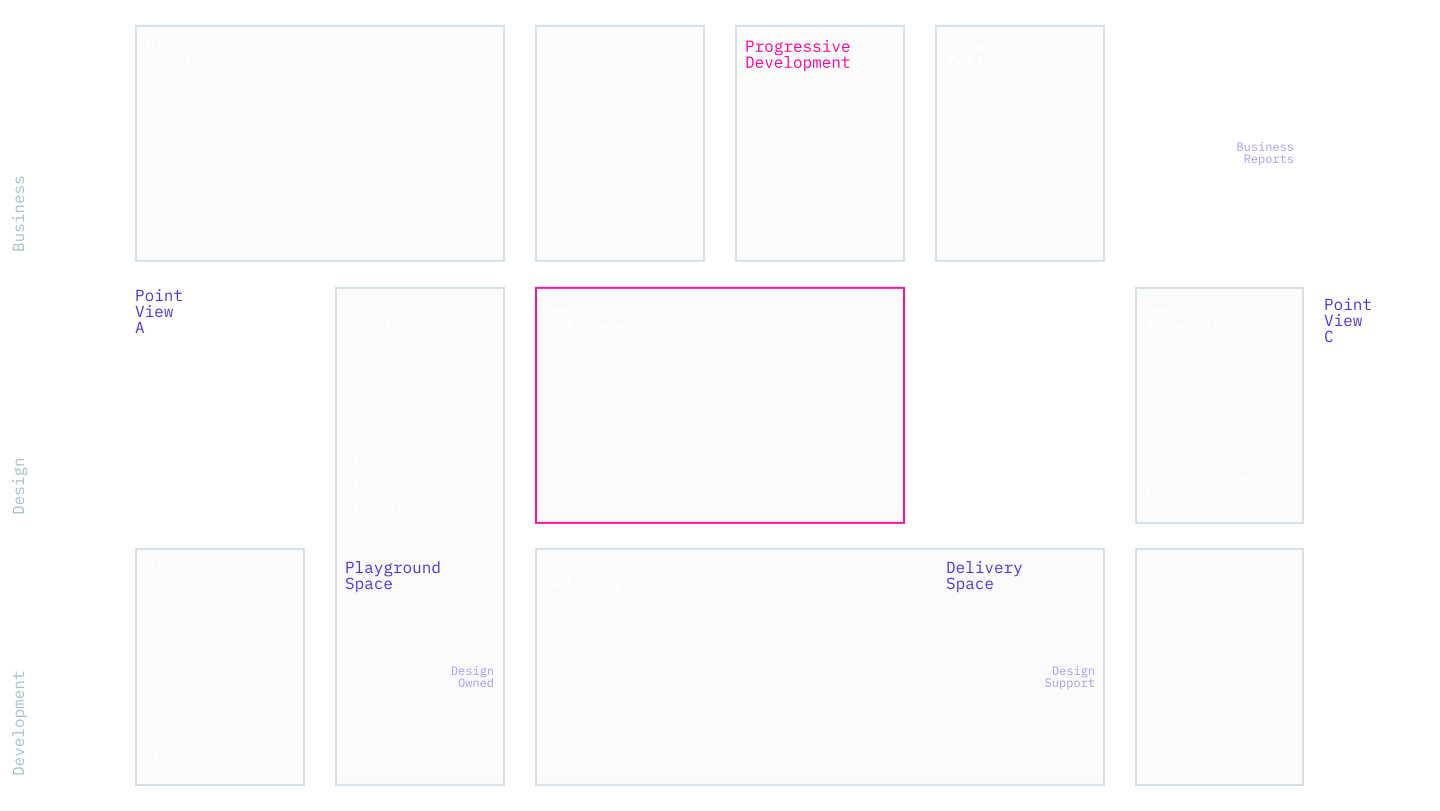
On Product Design Organisation.
Jiri Mocicka

Course
ACD
Type
Module
Available
1-2-1
— WHY
“The best product organisation comes down to strategic alignment, clear ownership, and empowered cross-functional teams, flexible unilateral decision-making, not chasing a single trendy org chart, or hype on the news feed.”
— OVERVIEW
The landscape of the
product design development.
A good organisational setup avoids chaos and ships consistently; the best organisations turn teams into outcome-driven functions that adapt as the company scales. Despite the operating model — Functional Model, Product-Based Model, Platform Model or Empowered Squad Model — all the above focus on Accountability, Autonomy, Operational Insights and Adaptability. The best Product Design Organisation has e the following attributes:
— World–Class: Deliver work of the highest quality to everyone you serve.
— Cooperation: Strengthen teamwork through collaboration, not competition.
— Self–Government: Empower teams to make local decisions autonomously.
— Participation: Encourage shared learning and cross–functional input.
— Co–Ownership: Give people a stake in outcomes, not just activities.
— Self–Management: Allow individuals to direct their time and priorities responsibly.
— Co–Entrepreneurship: Treat every team as a small business – always improving.
— Competition: Use transparency and comparison to inspire improvement, not pressure.
— WHO
Design Leader
Organisation structures are imposed by the business model and mainly the revenue stream, which also affects how things are designed.
Design Leaders often adapt to these models in order to provide value when required and when it fits the model. Providing value outside of these guardrails is considered waste and not contributory to business growth.
With Agentic acceleration, design leaders are stepping into exciting territory where experimentation not only speeds production but also speeds thinking and decision-making across teams, creating positive pressure on the squad, team, department, and, consequently, the entire organisation. The leaders who understand this change will lead the way and define new industry standsrds
— ROI
05%
Money
15%
Time
20%
Risk
60%
Culture
— WHAT
The Learning Curve.
— PACKAGE
Immediate Use
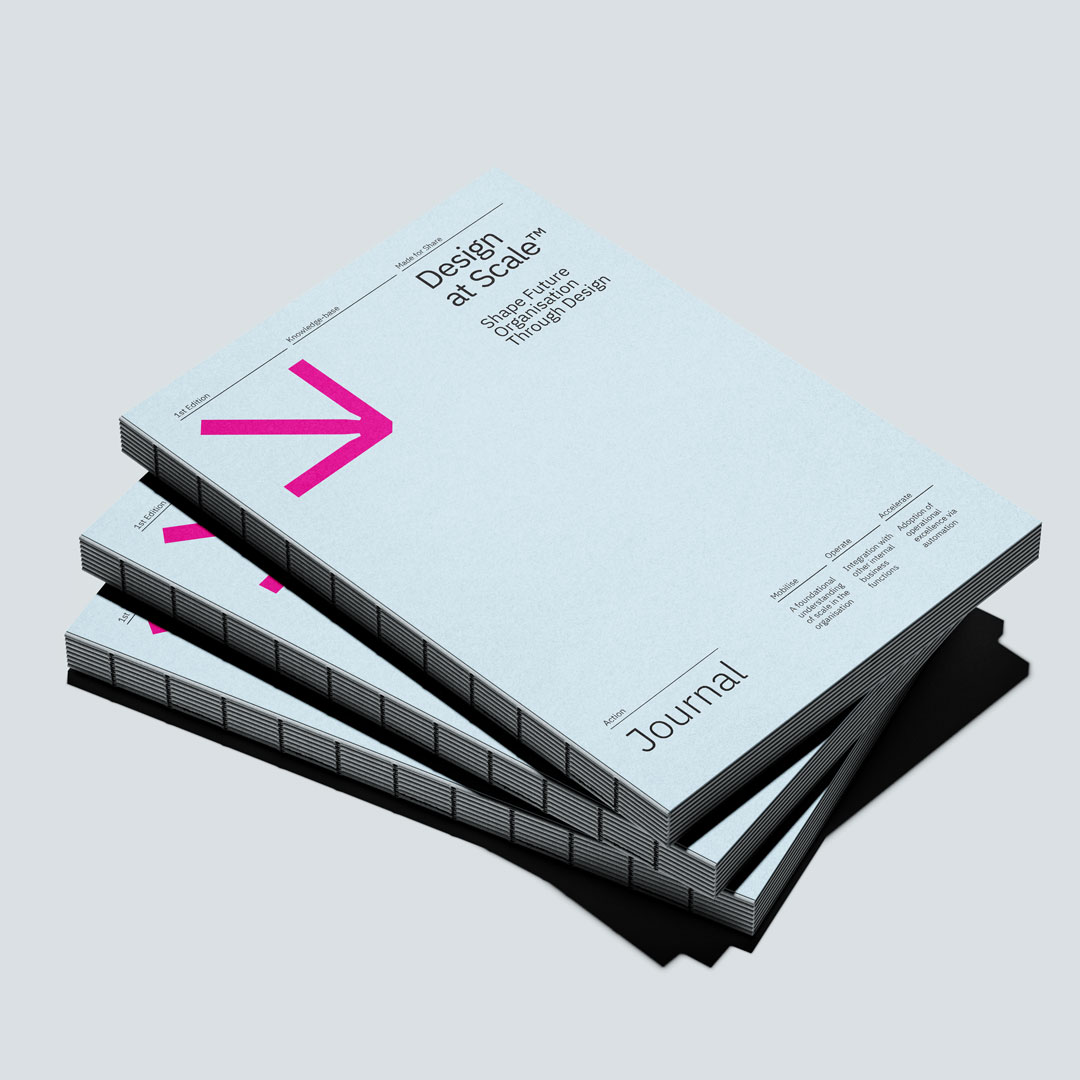
The following PDF summarises the module and its outcomes. Every attendee will receive full access to our Design at Scale™ SUPPLY Repository, where they can download and reuse our resources for all your own design ventures.
— GOAL
Key Takeaways.
In this module, we will address the following objectives:
— Understanding the organisational structure and where the design fits.
— Role of design in your organisation before and after Agenting integration.
— Dimensions on which your team is perceived: Strategy, Operations, Production and Culture.
— The product shift: from software to agentic.
— The speed translating to quality service and ease of adoption.
For Organizations
We Connect
A program designed for organisations that are looking to adopt or transition their design team to a product design function delivery model.
£650
£250
45m individual engagement
BOOK + JOURNAL – Free Assets
Relevant ASSETS from Design at Scale
20 x Design Leadership Modules
For Practitioners
We Make
An individual class for design leaders, managers, and design directors who shape their design function in their organisation.
£2500
£990
09 x 45min session in a month
MOBILISE – Personal Foundations
OPERATE — Systematic Design Leadership
ACCELERATE – Automating Design Delivery
BOOK & JOURNAL – Free Assets
All ASSETS from Design at Scale
20 x Design Leadership Modules
Module
Download
ProductDesignStorytelling.fig
Foundation

Integratioon

Business
Design
.fig
Development
BitBucket
2010
2026
Resources
On Ambition
On Motivation
On Flexibility
On Learning
On Focus
Resources
On Structure
On Technology
On Coms
On Adoption
On Trust
Resources
On Refactoring
On Algorithms
On Automation
On Security
On Scalability
— MODULES
01
Product
Design
Management
02
Product
Design Leadership
03
Product
Design
Strategy
04
Product
Design
Quality
05
Product
Design
Value
06
Product
Design
Process
07
Product
Design
Briefing
08
Product
Design
Research
09
Product
Design
Storytelling
10
Product
Design
Experience
11
Product
Design
Language
12
Product &
Operating System
13
Product
Refinement &
Automation
14
Product
Model
Orchestration
15
Product
Design Integration
16
Product
Design
Governance
17
Product
Design
Risk
18
Product
Designer
Foundation
19
Product
Team
Operation
20
Product
Organisation Acceleration
The Advisor

Our partners see the patterns others miss – we turn design complexity into a clear advantage.
— ARTICLES
Design
at Scale™

Categories
Data
Share
Internal
Collaborate
Resources
IBM PlexSan
Regular
Charcoal
Design at Scale™ is defined by three models, which form the Method. Each model operates in a different part of the business and collects and informs parties on design and engineering decisions that have a direct impact on the delivery.
All brands and trademarks presented on the Design at Scale™ website are owned by their relevant companies or agencies. The projects represent collaborations between designers, developers and product owners. Do not copy or publish any of the projects shown here without written approval from Design at Scale™ (alternatively GIVE™, 9V™) and/or relevant companies and agencies.


