Why Your Design Transformation Pilots Work, and Your Enterprise Design Function Rollouts Fail
The modern enterprise does not have an innovation problem; it has an adoption problem. While small-unit pilot routinely sparks excellence, the magic vanishes the moment progress is forced back into the legacy corporate machine. True organisational transformation is never really about chasing the next flashy feature, tooling integration, or fast-shipping code—it is about systematically redesigning the engine of delivery so that innovation can sustainably deliver the same increment in the next project 5, 10, or even 20% faster.
With new technological advancements that arrive every morning, we have fallen into the comfortable trap of output-driven design, measuring success by the volume of semi-polished screens or the speed of a single sprint rather than by real, systemic impact. It can be misleading for small and medium teams to think that launching something fast guarantees accelerated speed in a large organisation. What usually separates units from departments is the systematisation of the process that drives quality control. Organisations eagerly launch isolated pilots with clear mandates and protected budgets, treating them as low-risk playgrounds. Yet, beneath the surface, the broader enterprise remains deeply fragmented, hiding behind sticky-note collaboration and bloated, duplicate reporting lines.
Often, designers split their energy between incompatible tools, searching through infinite boards of Miro or Mural and chaotic workspaces for versioned assets. Deliberately, they are forced to cut the time to document design decisions for future reference and ongoing legal governance. When the pilot concludes its position on the success board, it re-enters the corporate ecosystem, where it is immediately hit by legacy governance, siloed ownership, and outdated decision-making loops. Regretably, it operates under the old illusion that scaling simply means multiplying headcount. Where in fact, adding more people to an uncoordinated, broken structure only burns capital and accelerates organisational friction.
Nature has protective mechanisms against viruses, and vaccines are delivered through specific tissue cells to restore only the damaged parts without affecting the remaining body cells. Your role is to deliver the vaccine to the organisational wound that heals the organisation from within.
To break this cycle, design function must move from an isolated aesthetic layer to an integrated system of organisational intelligence. Borrowing a page from hundreds of years-old industrial pioneers like Tomáš Baťa—who successfully scaled autonomous, self-governing units by uniting material, social, cognitive, and institutional pillars—we must realise that structure indeed drives scale, but culture and shared knowledge sustain it. Tomáš Baťa was profoundly known for "Thinking for people, hard work for machines", which he reflected not only in shoe-making but more importantly in every city he built around his shoe factory.
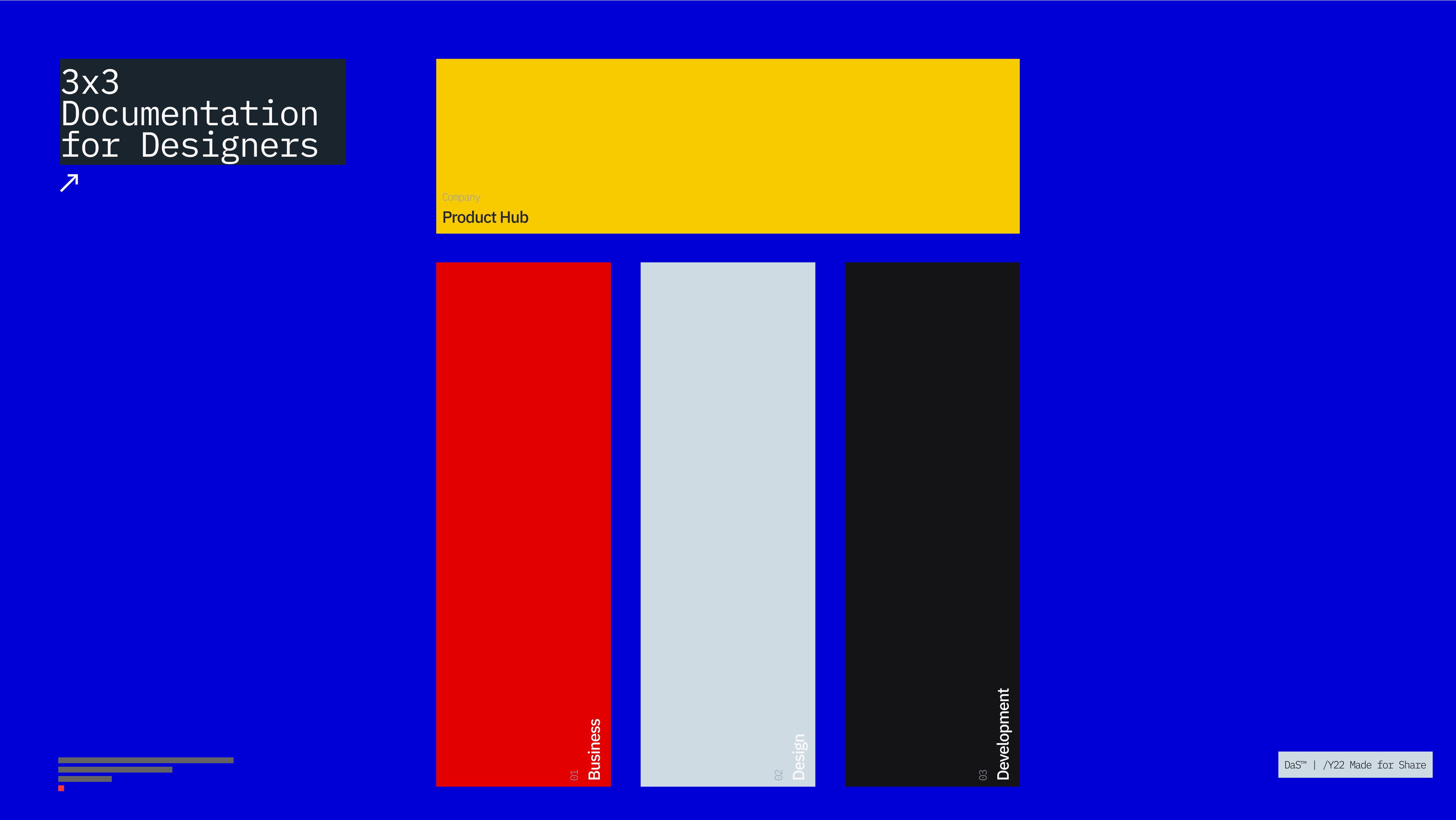
Fast-forward a century, and the Design at Scale™ Method bridges this gap through a simple, digestible principle: The Power of One. Establishing One Language, One Space, One Team, and One Product across the digital delivery landscape. Rather than abandoning teams to fragmented communication channels, our partners utilise the DaS™ Canvas, mapping the business, design, and development swimlanes side-by-side to expose exactly where the delivery flow breaks down.
+---------------------------------------------------------------+
|                 DESIGN AT SCALE™ CANVAS                       |
+=====================+==================+======================+
| BUSINESS            | DESIGN           | DEVELOPMENT          |
| Perspective         | Perspective      | Perspective          |
+=====================+==================+======================+
| Automated           | Integrated Copy  | Cross-Functional and |
| Team Enagament      | and Tone of Voice| integrated develoment|
+---------------------+------------------+----------------------+
| Strategic Roadmaps  | Tokenized System | Release              |
| Integrated PRDs     | Pattern Library  | Repository           |
+---------------------+------------------+----------------------+
| Tracable Research   | Tokenised Brand  | Integrated           |
| and Insights        | Repositories     | Traceability         |
+---------------------+------------------+----------------------+
This structural matrix has been designed as a comprehensive operational foundation with a nine-part architecture—reflecting the business structure and enabling all participants to stay up to date on the product and service in question.
Business Perspective: Centralising product definitions, editable OKRs, and business cases into a shared wiki (typically Confluence, but you can choose any platform that talks to a repository) so that strategy ceases to be an administrative afterthought. Enabling management to make fast, informed decisions while leadership can monitor and assess insights from operational units that produce outputs.
Design & Content Integration: Merging technical information architecture with living content operations and structural tokens. This eliminates scattered static documents and drives layout systems straight into the software. Database-based inputs are more reliable and actionable in the discovery and prototyping phases, delivering a well-refined agreement to the engineering team, who do not spend time wading through the objectives and actions of the ready-made code.
Development Ecosystem: Embedding Creative Technologists (XT) or vibe coders to build rapid, functional prototypes in code while designers work in Figma, validating technical feasibility instantly. The coexistence of both design and engineering creates the healthy tensions where the innovation happens.
In combination with the DaS™ Framework, which formalises explicit milestones—from Proposition Shaping (aligning on business context and success metrics) and Design Shaping (stress-testing assumptions via a service backlog) to Refinement, Parallel Development, and Comprehensive Integration—the entire organisation shifts from predictive guessing to adaptive learning.
When moving past the pilot stage to achieve genuine enterprise agility, our partners successfully implemented the following operational shifts:
Consolidated the Toolchain into a Single Source of Truth:
They migrated away from fragmented local files, standalone drives, and scattered whiteboards, mapping all active choices directly into Figma, Jira, and Confluence. This allows them to access, analyse and adapt to the next iteration of the product. Not to mention the advantages of faster internal adoption, testing, and time-to-market. Strengthening the culture of constant iteration from IC to C-Suite, where all contribute, challenge and value their product insights in One Space.
Deployed the Minimal Actioned Report:
Teams stopped generating dense, hundreds-of-pages specifications that were obsolete before delivery, documenting only what required immediate, trackable action. 90% of documentation happened naturally while building the product. If your documentation doesn't reflect your actions, your specs are the biggest internal waste. On the other hand, if your documentation is minimal, actionable, and clear about responsibility and what happens next, the business automatically defines its own known One Language.
Instituted Global Cross-Functional Broadcasts:
The team replaced a closed-door mentality with protective ceremonies and low-value automated daily status updates – we call drops. This allowed all team members to know the task was in progress. Introduced weekly design broadcasts, which simplified the boring Red-Amber-Green (RAG) system into a cross-functional broadcasting system that inspires conversation and ongoing debate beyond AI-slop. Strengthening the fact that we are all equal contributors who build One Product
Empowered Centralised Design System Teams:
Instead of pushing individual contributors into isolating product silos, they clustered experienced designers to preserve, automate, and distribute reusable intellectual property across the whole ecosystem. Creating a contributing culture and reflecting the health and maturity of the company shaped by One Team.
It is entirely natural for legacy management to fear that structural transformation will disrupt daily output or trigger complex adoption friction. However, by shifting documentation from passive archives to automated, searchable workflows, our partners have repeatedly reduced operational delivery costs by 25% to 30% while accelerating time-to-market by up to 3 to 5 times.
Reframing the delivery table that shapes organisational transparency across the business, design, and engineering perfectly reduces compliance risks in regulated spaces and elevates the strategic status of the entire product department. Signalling the maturity and literacy of data-driven decisions with human insights.
Enterprise scale doesn’t have to be a painful, chaotic process; when structured around transparent alignment, it becomes an active catalyst for internal process innovation. By replacing friction with automation, teams reclaim their cognitive energy, converting stressful, heroic sprints into a predictable, sustainable working experience.
Time is ultimately better spent on solving deep human problems rather than battling the systemic boundaries of your own organisation.
If your team is currently watching momentum leak out of an enterprise pilot and is ready to challenge the big thinking around your operating model, we are genuinely happy to talk and exchange notes.
Visit us at designatscale.co to explore our reference libraries and find a safe, data-driven space to elevate your operational excellence. We offer a variety of advice for individuals and organisations, whether your challenge is to advance your career in a complex environment, or you are a business piloting new initiatives while maintaining BAU – we are here to assist your launch.