As the world evolves around the LLMs and AI, we built design systems to help humans work faster and stay consistent. We treated them as static libraries of parts—UI bibles that promised order in a chaotic digital world. Every organisation has spent an excessive amount of resources to build one, yet before they have been really integrated at scale, we are entering the Agentic Era, where the primary concern is speed and quick decision-making instead of quality and safe, legitimate, verified deployment.
The primary consumers of our design systems are no longer just developers and designers. They are AI agents. These agents don’t “read” a design system the way we do; they consume context, metadata, and code patterns. If that context is flaky, agents don’t pause to ask for clarification—they simply play the card in their hands or hallucinate.
The main idea is simple: To survive the next generation of product development, we must move from static documentation to Agentic Design Eco Systems that provide machine-readable context, rigorous validation, and a self-correcting feedback loop.
The Death of the “Sticker Sheet” Mindset
Most organisations are currently making a massive mistake: they believe a high-quality Figma library is enough to "be ready" for AI. And sure, this is the first obvious step forward; unfortunately, it will cost more than the organisation can afford.
The Old Idea: "If the components look good and the unit tests pass, the design system is successful".
The Reality: Agents don’t care about your “vibe.” They care about Structure. We have relied on a "Human Judgment Layer” to fill in the gaps for years. When a developer sees a component that is slightly broken or out of date, they use their intuition to fix it or ask a peer. Agents lack this intuition. When they encounter “garbage in," they produce "garbage out" at a compounding, automated scale. This creates a heavier workload for our engineering colleagues than before.
Undoubtedly, the "Double Diamond" so-called sequence delivery and the traditional waterfall are off-the-shelf. A countless number of Jira tickets that no one understood are finally gone, too. Jira and Confluence have become a foundation for precise PRD definition, based on existing libraries referenced in prototyping and testing, and later in product development and deployment. The Machine for scale is now cleaning the management dust and restoring clarity, visibility, and efficiency to the build. We are no longer in the movie "Lost in Translation" between design comps and development implementation, but sketching the new transparent “generative” product design delivery that amplifies all the friction that prevents us from solving real customer problems.
From Components to Contextual Architecture
We need a better idea. We must view the design system as the "Operating System" of how an organisation builds its products and services as an ecosystem. To make this story readable for agents, we have to flip our thinking from visual patterns to Coverage and Validation.
The Story of the "Milquetoast" Response
Several Design System specialists argue that even when agents select the right components, their output is often "milquetoast"—generic, uninspired, and barely functional. This happens because the agent has the "ingredients" (the code) but lacks the "recipe" (the context of how things are smartly assembled).
The New Framework: The Operational Loop
An Agentic Design System (or OS) works in a continuous, non-deterministic loop:
- Reference: Agents consume predictable patterns, types, and normalised examples.
- Generate: The agent writes code based on that context.
- Validate: The system runs automated visual and functional tests.
- Iterate: If tests fail, errors are piped back to the agent to fix—autonomously—before a human ever sees it.
- Update: Once a human signs off, the validated code updates the design system, creating a self-updating record.
This isn't a theory. Several companies in EMEA are already using their design system to generate custom UIs on the fly. Instead of an operator navigating 17 layers of menus, the agent "conjures" the exact UI they need in real time, using the design system as the guardrail.
3 Steps to Agent-Ready Design
To transition your organisation, you must stop treating the design system as a side project and start treating it as Operational Infrastructure.
- Mobilise: 9 out of 10 design systems degrade not because they are badly designed, but because they lack maintenance protocols with a feedback loop. Identify components created years ago with out-of-date APIs. If you wouldn't trust a junior dev to copy-paste it, don't let an agent near it. In order to prioritise Machine-Readable metadata, use tools like the Model Context Protocol (MCP) to provide the "connective tissue" between your UI patterns and AI agents. Your props need descriptions, and your components need explicit composition rules.
- Operate: You cannot manage what you do not measure. Use your DS partner, such as Zeroheight, Storybook, Figma, Frontify, and Supernova, to benchmark your system against test prompts. Measure quality, token cost, and speed over time to ensure your system isn't drifting into chaos. And do not forget to document your Design Decision. As these have now become your foundation for any type of prompting and generating new UI.
- Accelerate: Adopt Experience Technologist Roles: Design Ops must move closer to Engineering. We need leaders who can architect the "Validation Pipeline"—setting the gates and guardrails that ensure AI-generated code is actually good.
I have always seen the design and engineering working like scientists on a new discovery—in self-governed teams that respond to business by inventing new formulas for success.
“Is AI going to make everything look the same?”
The most common resistance to agentic design is the fear of losing creativity or quality. “Will we just get generic, generated websites?”.
The answer lies in the Constraint Operating System. AI is non-deterministic; you can run the same prompt 100 times and get 100 different results. Your job is no longer to draw the pixel, but to define the boundaries of what is acceptable. By providing a rigorous description of a promise land—design system, you aren't limited by the creativity, time, quality or business—you are an “architect”, and your next invention is beyond your current perception of your imagination. That is why it is so vital to document your journey in the format of a high-quality, standardised brand definition of the new OS.
Another objection is the "Good, Cheap, Fast" trade-off. Some fear that optimising for AI will make systems too expensive or complex. However, available research suggests users vastly prefer UIs customised to them in real-time over simple text outputs—after all, we are visual creatures and a semi-haptic world helps us tio decide faster. The "cost" of building an agentic system is offset by the massive gains in human efficiency and product relevance.
The Future is "M-Shaped"
We are at a moment of "Neuroplasticity" for all our organisations. For the first time in human history, we do not have to follow the tracks. If you wonder what the next design method is, don’t. If you are a solopreneur, you’ll soon make your own. If you are in an organisation with over 1000 employees, you’ll continue to interact with people, and that means your transition to new methods will take far longer.
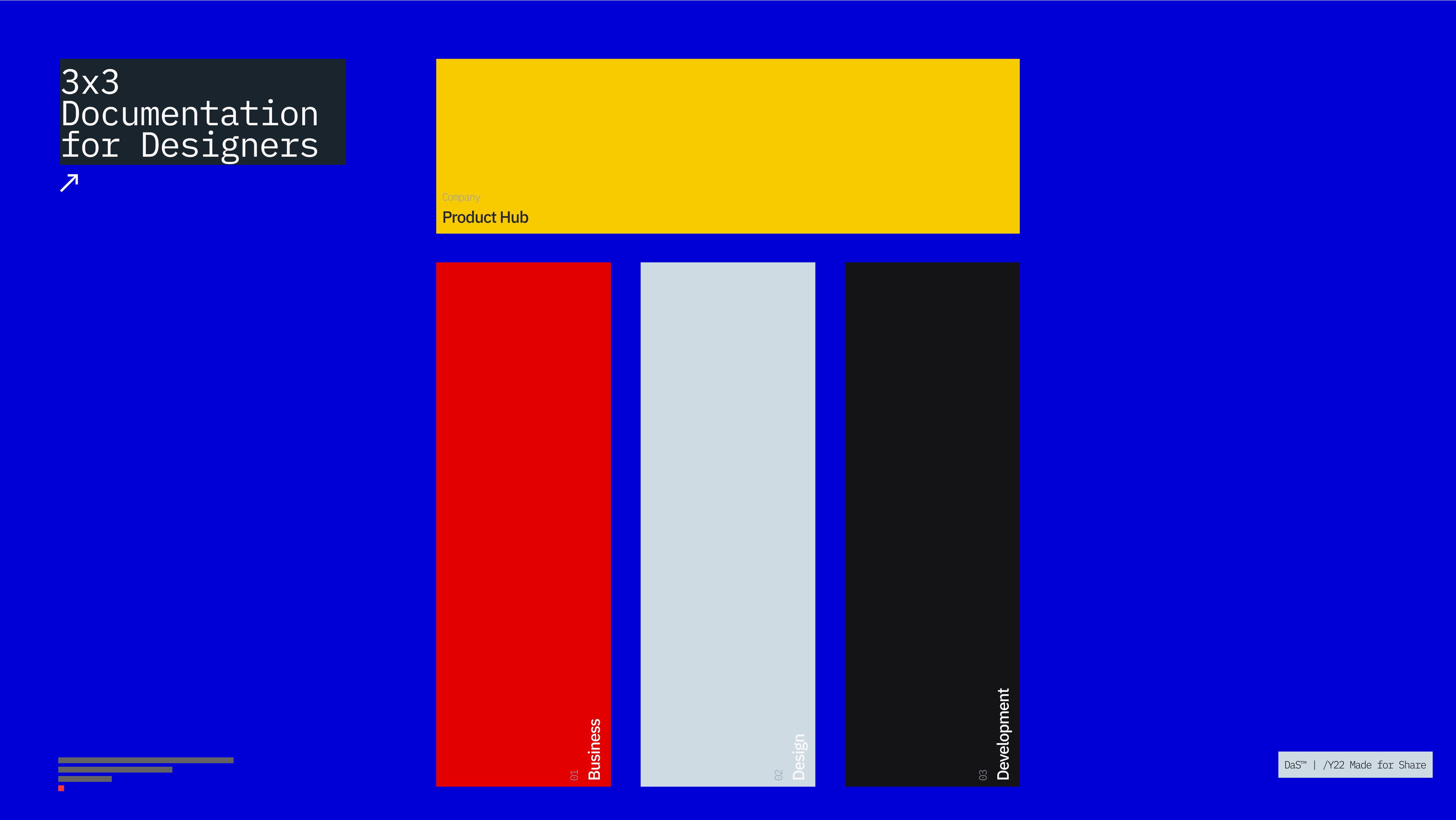
Design at Scale is no longer about how many Figma files we can produce. It is about Operational Excellence. We need leaders who understand the intersection of Business, Design, and Engineering—the "M-Shaped" leader who can justify the system’s ROI with hard evidence from automated evals. Design and evaluate craft = brand, experience, and feasibility for the deployment. Without missing a seamless integration with their engineering team.
An operating system is the foundation for this shift.
It is the only way to answer the most important question of your day: "What does the good look like?"
And whether that “good” makes desirable profit for your organisation.
Join the Definition Team
The era of "Lost in Translation" must end. We are building a community of leaders ready to establish healthier, more collaborative ways of working—removing the noise, shortening handovers, automating documentation, and deploying well-defined code snippets to our engineering colleagues toward true system orchestration.
Are you daring to move from doer to orchestrator?
- Dare to Scale: Connect with us on LinkedIn or Design at Scale.
- Agentis Design Leader: Explore the upcoming DS-to-OS courses.
- Design Maturity Matrix: Start by checking whether your organisation cover the basics for this transition.