;

The Era of Scale

Featured Image

The Method of Methods

Design at Scale™ reframes product design development into two clear phases:
— Proposition Shaping (requirements gathering, setting intent)
— Solution Development (prototyping, refinement, integration)

These phases work only when cross-functional teams operate from a single source of truth, supported by transparency across disciplines. The method grounds itself in a human-centred design ethos. Not as decoration, but as an operating principle.

At its core, the method emphasises:
— Adaptive planning tied to outcome-based KPIs
— Behaviour-driven requirements, not speculative wish-lists
— Creative direction that is inseparable from creative development
— Continuous, flexible responses to change
— Data-informed decisions, internal and external

The Design at Scale™ Mission Statement recognises the strengths of the frameworks that came before it - Agile, Scrum, Kanban, Waterfall, Double Diamond, Lean UX, Design Sprints - while addressing their blind spots. Each contributed essential evidence. Each clarified something about how humans collaborate. But none alone is sufficient for scaling design today.

DaS™ is the synthesis: A model that respects the discipline of engineering, the ambiguity of design, and the pressure of business - without subordinating one to the others.


Happy scaling through design!

Hey, I’m Jiri Mocicka.
London-based Product Design Director, Trusted Advisor and Author of Design at Scale™. The method that empowers individuals to shape the future organisation through design.
If you have a question, join our Community and reach out to like-minded individuals who scale design propositions. An online Academy can help you to define teams of 01, 10, and 100, and 1% is supported by Grid Magazine and Supply section, where we bring more insights weekly on how to become a design leader in your Agentic Organisation

Jiri Mocicka

AVATAR

inResearch

21

inWriting

45

Released

260
EMT

Related.

Featured Image
Scaling design isn’t about headcount. Instead, it’s about coherence. Whether you’re a team of 1, ten, or an organisation with hundreds of designers scattered …
April 23, 2025
 · 
2 min read
Featured Image
We now understand how major corporations approach product design and its place within the business. More importantly, we can see how those systems shape …
April 16, 2025
 · 
5 min read
Featured Image
Frog approached design as an ecosystem - where imagination, making, and scaling form one continuous loop. Its three-stage model - Imagine, Make, Scale - …
April 9, 2025
 · 
1 min read
Featured Image
IDEO made human-centred design a global movement. Its approach begins and ends with people. Their behaviours, frustrations, and aspirations. And turns those insights into …
April 9, 2025
 · 
1 min read
Featured Image
McKinsey turned creative intuition into operational discipline. Its Design Delivery Model brings design thinking into the heart of business performance - linking user insight, …
April 2, 2025
 · 
1 min read
Featured Image
IBM transformed corporate innovation by scaling empathy. Its Design Thinking model, Empathy, Rapid prototyping, Co-creation, Storytelling, and User Outcomes, reframed how vast organisations could …
April 2, 2025
 · 
1 min read
Featured Image
Google didn’t invent collaboration; it industrialised it. Its Design Sprint compresses the creative process into six deliberate phases: Understand, Define, Sketch, Decide, Prototype [001↘︎], …
March 26, 2025
 · 
1 min read
Featured Image
If Ford built the rhythm of production. Toyota taught us to improve it. And Baťa gave it purpose. Then along came digital and transformed …
March 19, 2025
 · 
4 min read
Featured Image
Experience Is Not the Problem. Organisations That Can't Use It Are. The design profession is quietly steering out its most capable practitioners at precisely …
January 13, 2026
 · 
7 min read

GRID Magazine

Explore OUR 
Articles

Every week we bring set of stories reflecting on communication, operation and technology.

Newsletter

Subscribe.

We share our 20 years of experience in creating, managing and scaling products and services that allow individuals to shape organisations through design.

Design at Scale™

LINE_MAGENTA_050_301

Categories

LINE_MAGENTA_050_301

Data

LINE_MAGENTA_050_301

Share

Internal

Collaborate

Resources

IBM PlexSan
Regular
Charcoal

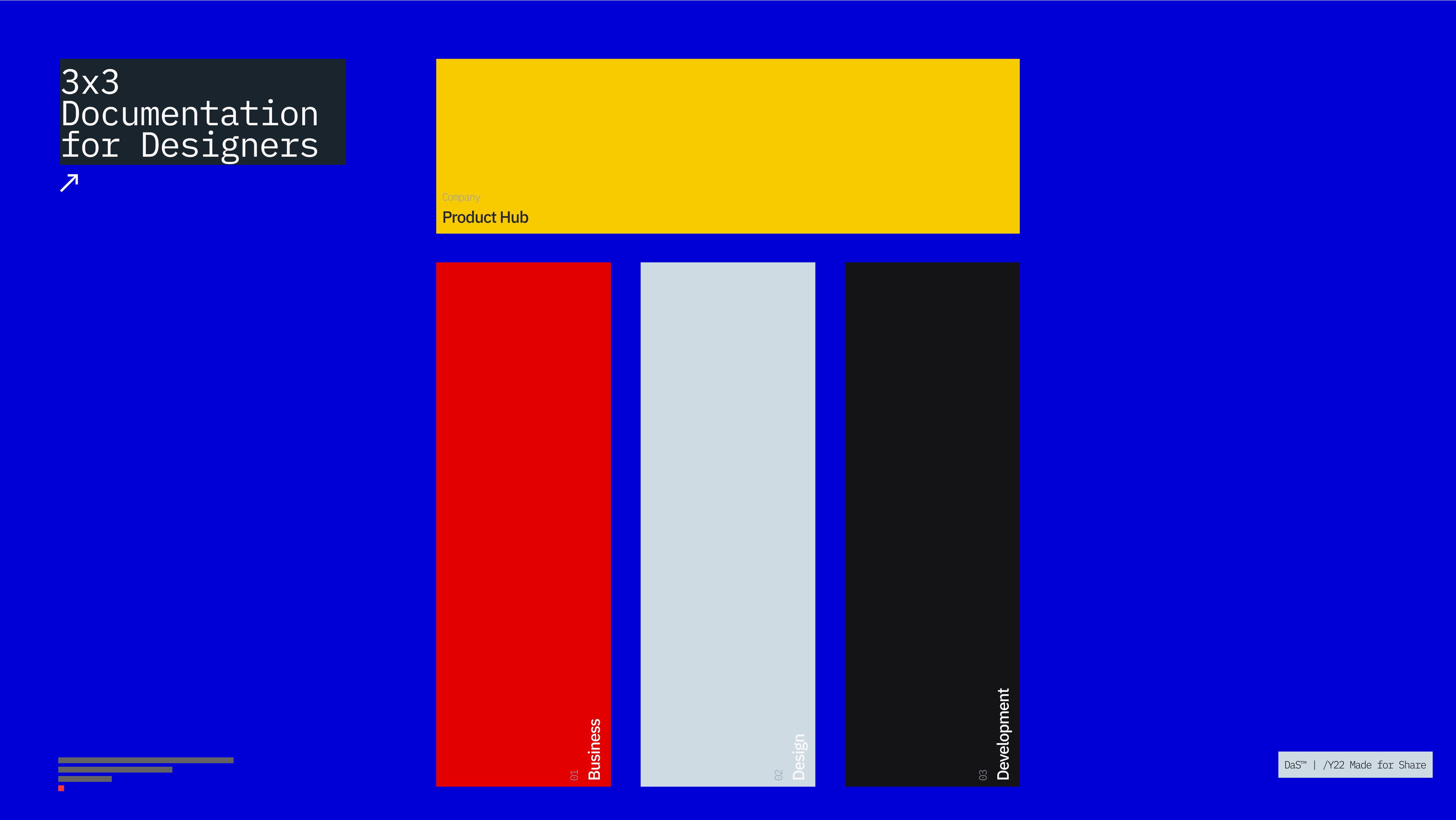
Design at Scale™ is defined by three models, which form the Method. Each model operates in a different part of the business and collects and informs parties on design and engineering decisions that have a direct impact on the delivery.

All brands and trademarks presented on the Design at Scale™ website are owned by their relevant companies or agencies. The projects represent collaborations between designers, developers and product owners. Do not copy or publish any of the projects shown here without written approval from Design at Scale™ (alternatively GIVE™, 9V™) and/or relevant companies and agencies.

SOC_Twitter
SON_LinkedIn
SON_Instagram
SOC_-Medium
View