If we want to understand where design is heading, we need to remember where it came from.
Historically, design was a sequence: sketch, refine, produce, deliver. Whether painting a canvas or building a bridge, every discipline follows a clear chain of cause and effect. The tools changed, but the logic didn’t.
Then came technology.
As machines entered the studio and the factory floor, design and engineering began to shape each other. The invention of new materials - from pigments to polymers - redefined what was possible. Steam engines, printing presses, and industrial machinery didn’t just accelerate production; they changed the psychology of making.
By the 20th century, design wasn’t just about beauty or function. It was about efficiency.
Factories scaled, markets expanded, and the craft of making gave way to the system of manufacturing. You could now build more - faster - for less. But this linear model had limits.
At a certain point, productivity plateaued. The more you scaled, the more coordination you needed, and the harder it became to keep quality consistent.
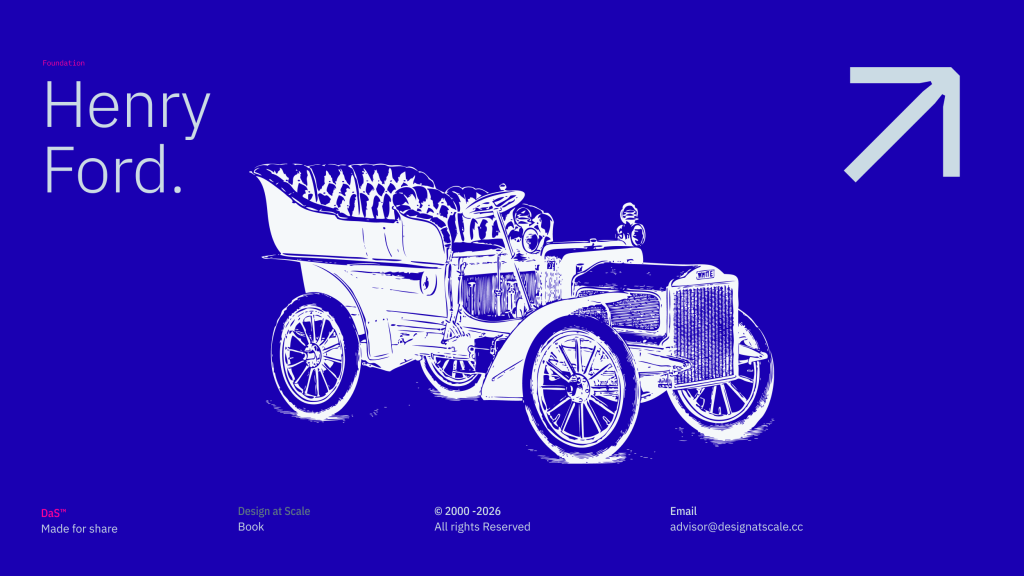
Henry Ford saw this tension early.
At the River Rouge Plant, he pioneered the modern assembly line - a symphony of moving parts where every worker, machine, and process played a precise role. The system didn’t just make cars faster; it made them reliable.
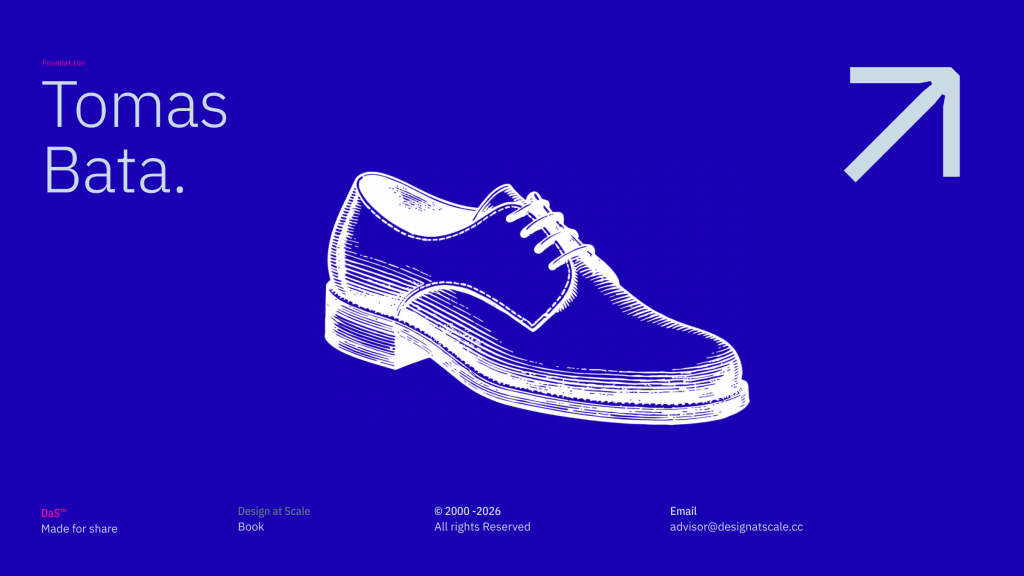
Across the Atlantic, another visionary, Tomáš Baťa in Czechoslovakia, observed a similar principle. His shoe factories were experiments in distributed innovation. Every part of the process - from stitching to packaging - was modular but synchronised. Each component evolved independently as long as it delivered to the main line on time.
That was the genius: a system designed for both speed and evolution.
These industrial models didn’t just change manufacturing. They redefined the architecture of modern design. They showed that scale wasn’t about headcount - it was about structure.
And while much has changed - from factories to Figma - the same logic applies.
Today’s design teams mirror those early production lines. The “stations” are now research, prototyping, testing, and delivery. The product might be digital, but the underlying mechanics of efficiency, communication, and iteration remain.
Understanding that lineage isn’t nostalgia. It's a strategy.
Because every design system, every sprint, every “agile” framework is built on principles first forged by people who made cars, shoes, and bridges - not interfaces.
And as we’ll see in the next sections, those foundations — Ford, Toyota, Baťa — still hold the blueprint for how design scales today.