Dear (none)Designer,
Welcome back to the fourteenth Design at Scale™ Newsletter – focusing on innovation and how design drives change in a large organisation or an agency.
Today, we will focus on how Design at Scale helps manage multiple product teams with a single backlog and deliver the high-quality software that defines the Sky Q and Sky Glass.
While joining the Sky as an Experience Design professional, I have the great pleasure of serving 17 product owners. Each one of them has driven a specific feature that was a part of the ecosystem called SkyQ. As the majority of the UX professionals can imagine, all of my product owners asked me, "can you please do me a wireframe for this flow?" or "can you please do me a user journey for that?" or "can you please do me some research for this specific feature?".
In less than three weeks, it became obvious that serving 17 masters is quite impossible and time-consuming. What also became obvious was the monotony of repetition that has been replicated across different features. The majority of question lied in navigation and behavioural model, research and analysis and mapping a user journey.
I've therefore created a User journey model that can be easily adjusted and quickly exported to PDF at first. Fast forward three months, and I have found out that all my PDFs were shared with an engineering team that has been redrawing them in something called Lucidchart and then assigned to Jira. Over coffee, we discussed the time wasted and the amount of changes we prevented from being in live format, and decided to synchronise our approach to mapping.
Within less than two months, all diagrams and journeys were in a native format available to the entire team. More importantly, designers actually create and maintain them, which freed up our development time.
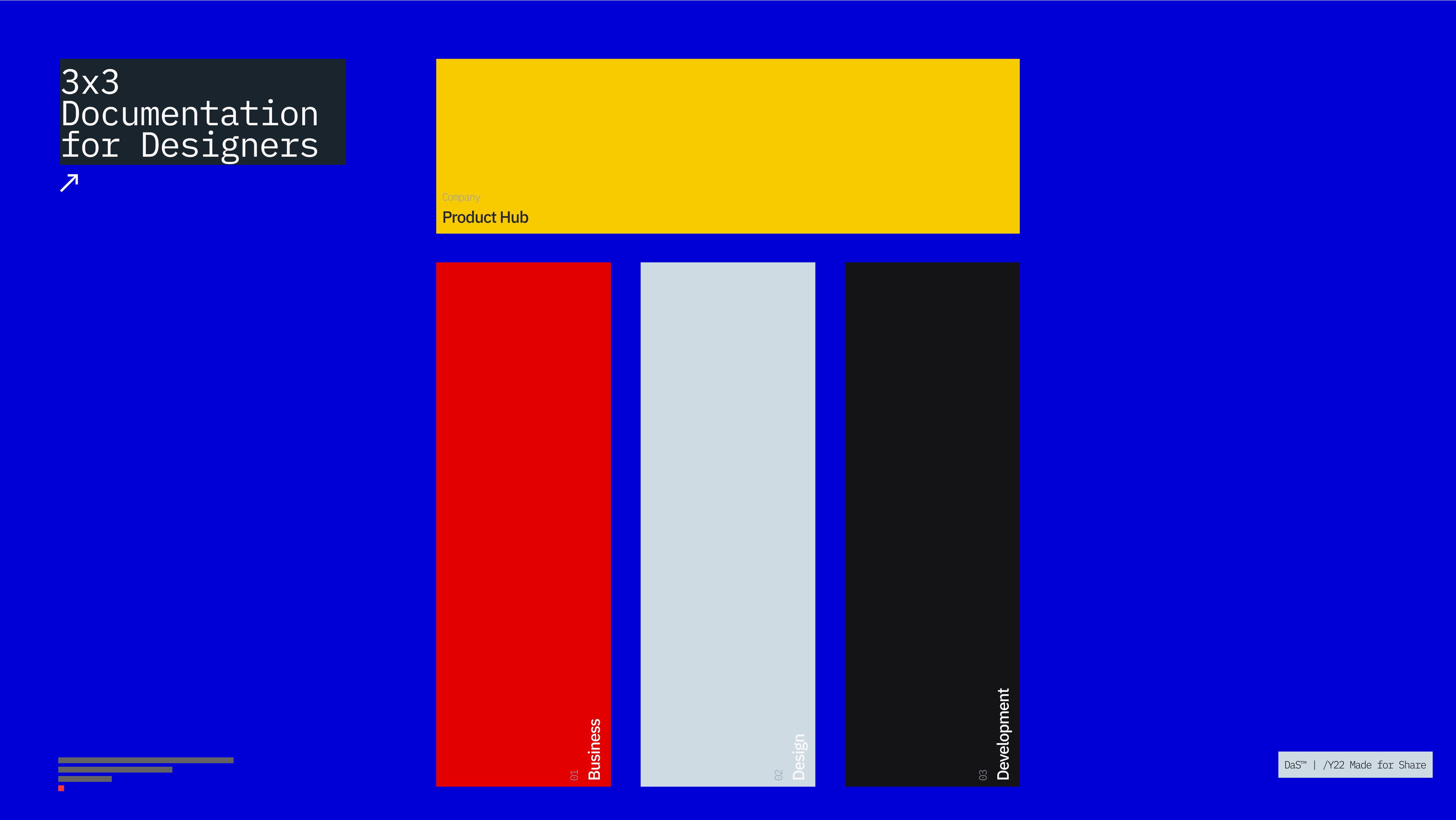
With the permission of a Group Design Director, I have requested permission to stop documenting in design files and start documenting in Confluence. All my questions for all product owners get centralised. Once, there was a simple difference from the previous engagement strategy. Instead of drafting and replying to 17 emails, I have written a couple of pages on Confluence that receive regular updates (Watch Page) and reduce email communication to a minimum. On the other hand, I began collecting feedback in the context of the feature, with an appropriate representative – the CPO. In many ways, all features share the same structure, including HLR, UAC, FR & NFR and NFR, as well as user journeys and wireframes. Joining them with real-life design from our UI team was pure magic.
While asking questions, I was also documenting these design decisions in one single place. Instead of sending hundreds of emails to different product owners, scrum masters or business analysts, I have always referred to the page that I created in Confluence. Soon enough, this became a standard way of working, where the majority of them referred to these pages in their product presentations. This eventually led to a focus on a single, knowledge-based core, which we referred to as the core.
Fundamentally, our small initiative has evolved from a 3-month exercise into a 12-month solid product design documentation, which we later developed into Sky OS. The foundation refers to all buttons, colours, primitives, sizes, spacing, as well as the definition of the component in React, HTML, and CSS code that has been driven across TV, desktop, tablet, mobile, and wearables. We all referred to it as a knowledge base.
This allowed our colleagues from sports, news, creative, and other departments and lines of business to tap in and tap out for the features they required for the specific event, whether we were designing for cricket, rugby, tennis, or Formula One broadcast. The components, such as maps, data visualisation, infographics, text blocks, and someone has been constantly available to simply plug and play, and get the advantage of a customised UI ina time sensitive proposition.
Time passes, and Sky OS has grown into a solid proposition that drives business decisions across the majority of even-based broadcasts, allowing program producers to customise the E2E interface by choosing from an extensive white-label library of components that drive the quality of journalism from Sky.