Product delivery begins once design delivery establishes the foundation for engineering. In adaptive organisations, design and development run in parallel. Designers support engineering by clarifying behaviours, refining edge cases, updating components, and validating the product’s evolving shape.
In less mature organisations — particularly when development is outsourced — design may be finalised before engineering begins. While this reduces ambiguity for the vendor, it slows iteration and increases risk. Section 3.0 explores these adoption constraints in depth.
Product delivery is executed within Scrum or hybrid frameworks. Work is organised into releases, epics, and user stories. Engineering builds, tests, and deploys incrementally, while design remains embedded to verify fidelity and ensure alignment with the defined mental model.
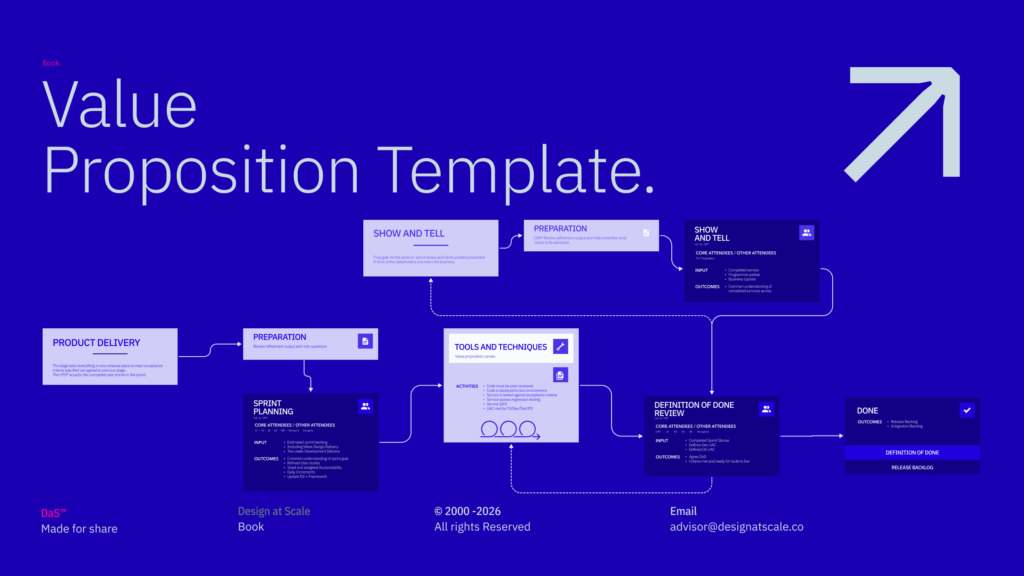
Dependencies are continuously managed. Cross-functional collaboration prevents misalignment across business, engineering, and design. Poor management can create codependency between teams, slowing progress and causing conflicts that require escalation.
Just like design, development also operates with a Definition of Ready and Definition of Done. These definitions ensure transparency, accuracy, and consistency across disciplines.