The purpose of proposition shaping is alignment. By the end of this stage, every discipline should hold the same documented understanding of the work: scope, timing, resources, knowledge gaps, operational needs, customer objectives, revenue model, ROI expectations, and the KPIs that define success.
The process begins with a design brief created by the CPO (Certified Product Owner). This includes goals, constraints, early assumptions, and the role of technology in enabling the proposition.
We then convene a structured workshop with a cross-functional team — CPO, senior designer, service designer, solution architect, business analyst, organisational navigator, lead engineer, and any additional contributors. The output is a draft design brief, incubation summary, competitive analysis, background documentation, and a written business case describing how the proposition will generate revenue.
Next, the team identifies gaps in understanding. These are documented in the Project Identification Document (PID) alongside required research, heuristic reviews, and competitive landscape work. The team records all assumptions and decisions early to avoid ambiguity later. Once the business case is refined and validated, each party has a clear sense of their role in delivering the product or service.
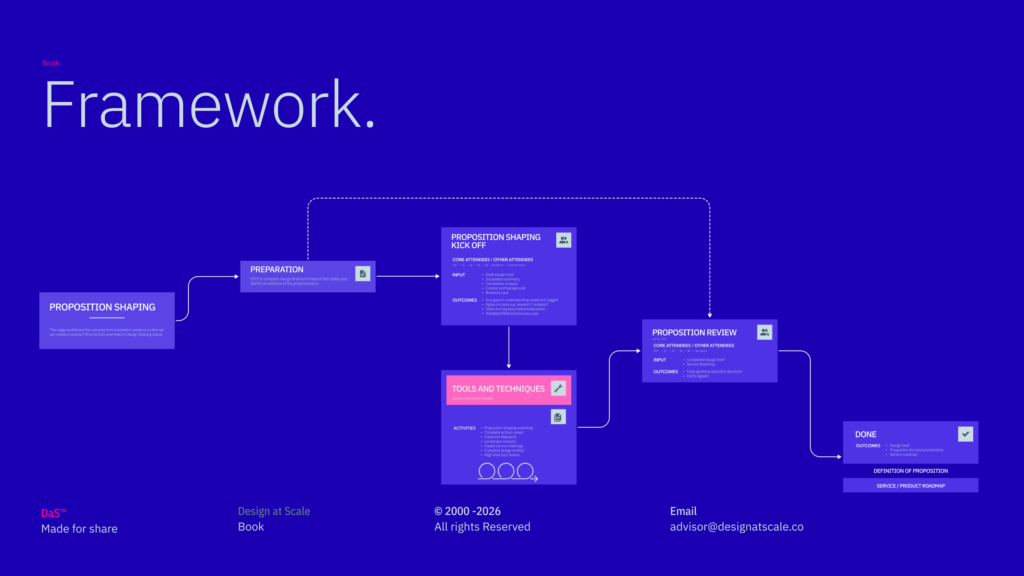
Proposition shaping draws on tools such as workshops, customer research, landscape analysis, creative briefs, service roadmaps, and brand guideline reviews. A high-level review of tech and data sources is also conducted. The insights generated feed into a value proposition canvas, which clarifies customer needs and expected outcomes.
The stage concludes with a formal review with the same group. Required materials include a completed design brief or PID and a detailed service or product roadmap showing milestones, requirements, and system-wide agreements. Depending on the proposition's complexity, this results in either one PID or multiple interconnected design briefs. All documentation links back to the roadmap, typically managed through Jira.
Based on two decades of practice, avoid physical boards or offline documentation when shaping propositions. Use Confluence and Jira to maintain clarity, transparency, and traceability from day one.