Aligning Human Senses and Technical Communication to Unlock Enterprise Scale
In a quickly evolving global corporate environment, cross-functional alignment is the ultimate metric of operational achievement. Yet, semantic and physiological noise creates friction at the interface between human teams.
It has been well documented that communication breakdowns are rarely caused by a lack of motivation; they are driven by physical factors—such as cognitive exhaustion, sensory overload, and varying baseline capacities. This is often contributed to by alienating jargon and abstract concepts. It is often necessary to use acronyms, especially when repeating the same phrase over and over loses colleagues' focus, yet staying even more dedicated to communicating the value proposition[001↘︎].
To achieve true organisational harmony, enterprise propositions must step away from rigid corporate silos into "M-Shaped" leadership structures [002↘︎]. That way, humans can overcome physiological limits and translate technical language into clear, actionable terms that drive progressive decision-making.
The inherited legacy paradigm continues to cripple traditional corporate operations: the belief that professionals should conform uniformly to rigid communication standards, regardless of their individual physical states or functional backgrounds. This rigid model is an expensive organisational mistake.
It is often assumed that if a technical design document or an executive presentation is functionally accurate, your leadership team is entirely responsible for absorbing it. This mindset ignores physiological and semantic noise. When we send a mixed message through professional jargon, too complex grammar, or abstract ideas lacking concrete examples, we are not showcasing our intelligence — we are engineering miscommunication and often confusion. This conflict is exacerbated by physiological noise, such as acute stress, physical fatigue, and sensory overload, which can cause the human mind to lose focus.
True corporate scale requires a structural change in your human resource development: your leadership must understand context and treat communication as a flexible platform designed around human constraints. When an organisation minimises semantic and physiological barriers, it builds an inclusive ethos of collaboration and mutual respect.
Consider the precise mechanics of these internal communication barriers. Physiological noise concerns an individual's immediate physical state, which can overload the mind and lead to a drop in focus on the topic or evidence. Inevitably, semantic noise occurs when an encoder fails to practice comprehensive audience analysis, deploying specialised language, ambiguous terms, or structural grammatical errors that divert the decoder’s attention from the core message. In this context, the encoder is the sender and the decoder is the receiver.
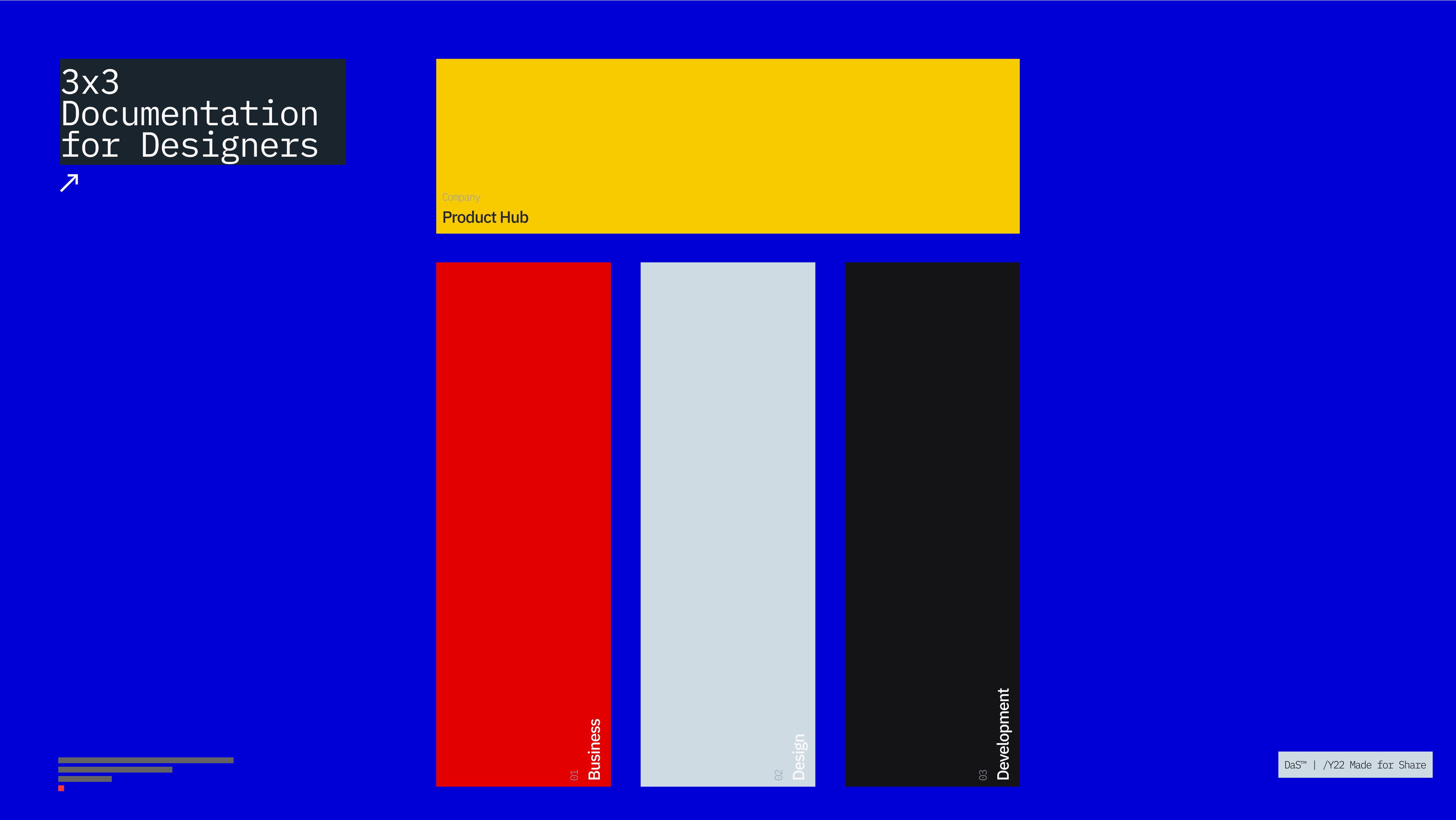
The Design at Scale™ methodology solves this human crisis via systematic Refinement[003↘︎] and Integration[004↘︎]. Rather than permitting teams to speak in isolated, functional dialects, the framework develops "M-Shaped" leaders with deep vertical expertise in three critical pillars: Business Strategy[005↘︎], Design Orchestration[006↘︎], and Engineering Feasibility[007↘︎]. Because they sit at the intersection of these distinct cultures, they act as organisational translators, converting dense engineering constraints and complex business goals into simple, straightforward, and highly accessible directives that anyone can comprehend and execute instantly.
To eliminate semantic drag and adapt to human physiological limits within your enterprise, your organisational leadership must implement immediate tactical updates. Here, semantic drag means the delay caused by unclear language and mismatched understanding:
- Enforce the KISS (Keep It Simple, Stupid) Language Standard: Mandate that all internal communication channels, technical project requirements, and corporate presentations use clear, straightforward language, free of unnecessary professional terminology and ambiguous acronyms. Back up every abstract concept with a concrete, visible example. Here, KISS means preserving communication as simple as possible without losing meaning.
- Deploy Adaptive Information Delivery Systems: Stop relying exclusively on dense, text-heavy wikis or lengthy presentations that trigger sensory overload. Deliver critical architectural information through highly accessible, multi-channel streams—such as visual gallery boards, interactive briefings, and structured audio summaries that support variable font sizing and digestible learning speeds.
- Deploy Real-Time Audience Feedback Mechanics: Train your team facilitators to actively monitor visual and physical cues during real-time meetings. If audience focus is waning due to fatigue or timing, instantly adjust the message delivery by shifting to a succinct approach, pausing for a cognitive break, or requiring recipients to summarise the intent to verify absolute alignment.
The most common resistance to standardising simplified language and adaptive information streams is the misconception that flattening technical vocabulary somehow dilutes the precision or sophistication of complex engineering and business strategies. Experts often protect their specialised jargon, believing it is absolutely required to convey high-fidelity data.
However, the reality is the exact opposite. True sophistication is the capacity to translate complex logic into clear, simple, and universally understood directives. Guarding dense jargon doesn't preserve precision; it merely masks a lack of clarity, generating defensive communication barriers and severe operational risk[008↘︎]. Shifting to a highly accessible, simplified standard releases internal tension and enables cross-functional teams to collaborate with absolute certainty and zero cognitive friction.
Human brains are non-stationary, and their processing capacity fluctuates based on physical states and functional backgrounds. Corporate scale cannot be achieved when teams speak in conflicting dialects across isolated silos. By restructuring your human operations around simplified language and "M-Shaped" contextual translation, you insulate your company from execution gaps, empower your diverse workforce, and build an agile engine of sustainable innovation.
Are your cross-functional initiatives stalling due to dense specialised jargon, muddled directives, and human sensory overload?
It’s time to modernise your human architecture. Discover how to build a highly adaptive, inclusive, and exceptionally aligned leadership culture by exploring the operational systems at Design at Scale today.