A mindset is a set of assumptions and methods that guide how individuals or groups make decisions. To understand the mindset behind Design at Scale™, it helps to distinguish between two branches of decision theory: normative and descriptive.
Normative theory defines how decisions should be made - rationally, logically, based on expected utility.
Descriptive theory explains how decisions are made - influenced by biases, emotions, shortcuts, and loss aversion, as described by Kahneman and Tversky.
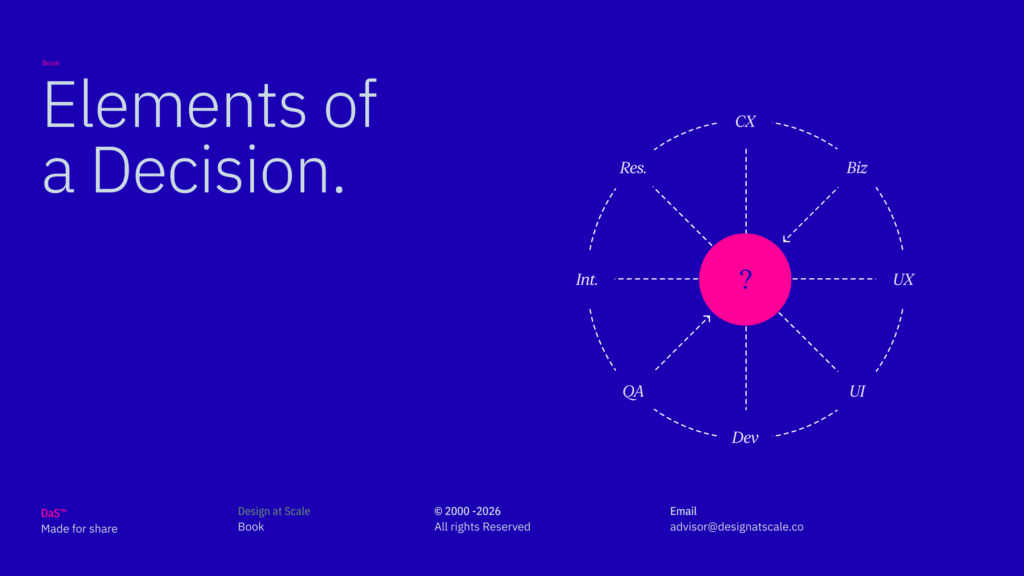
Elements of a Decision
— Every decision contains the same core components:
— Actions - the available choices
— Outcomes - the potential results
— External events - factors outside our control
— Payoffs - the value attached to each outcome
Individual Mindset
An individual mindset is the lens through which a person interprets challenges and possibilities. Carol Dweck’s distinction between fixed and growth mindsets illustrates this well:
— A fixed mindset sees talent as static and avoids difficulty.
— A growth mindset sees ability as developable and leans into challenge.
— Mindset isn’t personality; instead, it’s an internal operating system that shapes motivation, resilience, and behaviour.
Professional / Collective Mindset
A collective mindset is the shared set of beliefs that guide how a team or organisation works. It shows up in norms, decision-making, and daily delivery. This is often without ever being written down.
For example:
— A customer-first mindset prioritises user needs in every decision.
— An innovation mindset encourages experimentation and tolerates failure.
— A safety-first mindset places protection and responsibility above speed or cost.
These shared beliefs shape how teams collaborate, how they interpret risk, and how they respond to challenges. In design, the collective mindset determines whether teams deliver features or deliver value.
Individual & Professional Mindset - The Design at Scale™ Mindset
A Design at Scale™ mindset is a practical philosophy of delivery. It shapes how individuals understand a problem, collaborate with others, learn continuously, and adapt under pressure. This mindset enables teams to respond collectively rather than struggle in silos, and it creates the conditions for high-performing results on any task, decision, or outcome that contributes to incremental value.