In the early 1900s, a cobbler knew every curve and stitch of the shoe they made. They built by hand, understood materials intimately, and saw the craft through from start to finish.
Today, a shoe designer might spend months on software like Autodesk Fusion, never setting foot in the factory. The work is efficient, distributed - yet, strangely disconnected.
Digital design followed the same path.
In the 1970s and ’80s, Design Directors were guardians of clarity. Their word set direction for magazines, books, and advertising. When they made a decision, the team aligned. There was confidence in the process because the stakes were real. Mistakes couldn’t be undone with a click; every choice mattered.
That respect for decision-making defined design leadership.
Now, the same title comes with less authority and more bureaucracy. Design Directors spend more time navigating systems than shaping them. Meanwhile, product designers chase efficiency, talking about “Agile” as if it were a religion.
The shift from paper to digital was supposed to give us freedom. Instead, it made us file managers. We fix, store, and search. We spend hours trying to find the latest version of something we already designed.
Then came the flood of tools.
From zip drives to cloud boards, plugins, filters, and version trackers. Design became a scavenger hunt. Everyone now has access to professional-grade software, which means everyone, theoretically, can be a designer.
But with that access came noise. We traded precision for convenience, composition for collaboration. We replaced layouts with emojis and Post-its and called it progress.
The outcome? We’ve mistaken activity for output.
Too many teams now work under the illusion that only the end result matters. They chase delivery speed, not design quality. The cost is staggering: roughly 80% of their energy disappears into coordination. Think: mock-ups, spreadsheets, hand-offs, exports, feedback loops across time zones, potentially too.
If that sounds familiar, you’re not alone.
Selling speed is easy. You promise “faster to market,” and everyone nods. But what looks efficient in the short term often burns productivity in the long run. Startups over-communicate to survive, hoping Slack will save them. Medium-sized businesses can move faster, but still bleed time and focus. Enterprises? They move like tectonic plates — slowly, expensively, and often in the wrong direction.
I once worked with a partner who began switching from PCs to MacBook Pros in 2016. It took them five years to move 300 designers over. Five years - to update hardware that changed annually.
How painful is that? That’s not transformation. That’s inertia disguised as progress.
Technology moves too fast to control. The only constant you can design for is process. And the process lives in routine.
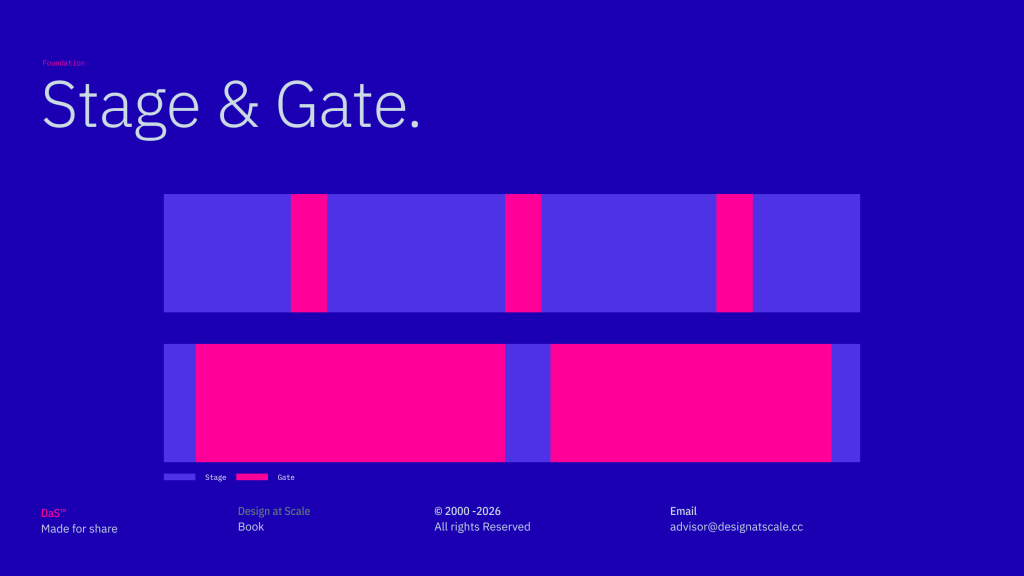
A good routine is the quiet infrastructure of creative work. It doesn’t limit you; it anchors you. Whether you lead a team or just contribute to one, routine gives rhythm to chaos.
You can’t stabilise an organisation overnight. But you can stabilise yourself. You can design your day with intent: how you start, how you decide, how you stop.
Sometimes that means nothing more radical than a 10 a.m. coffee before the storm begins. Because when the tools shift, and the deadlines blur, it’s not the gadget that keeps you going. It’s a habit.