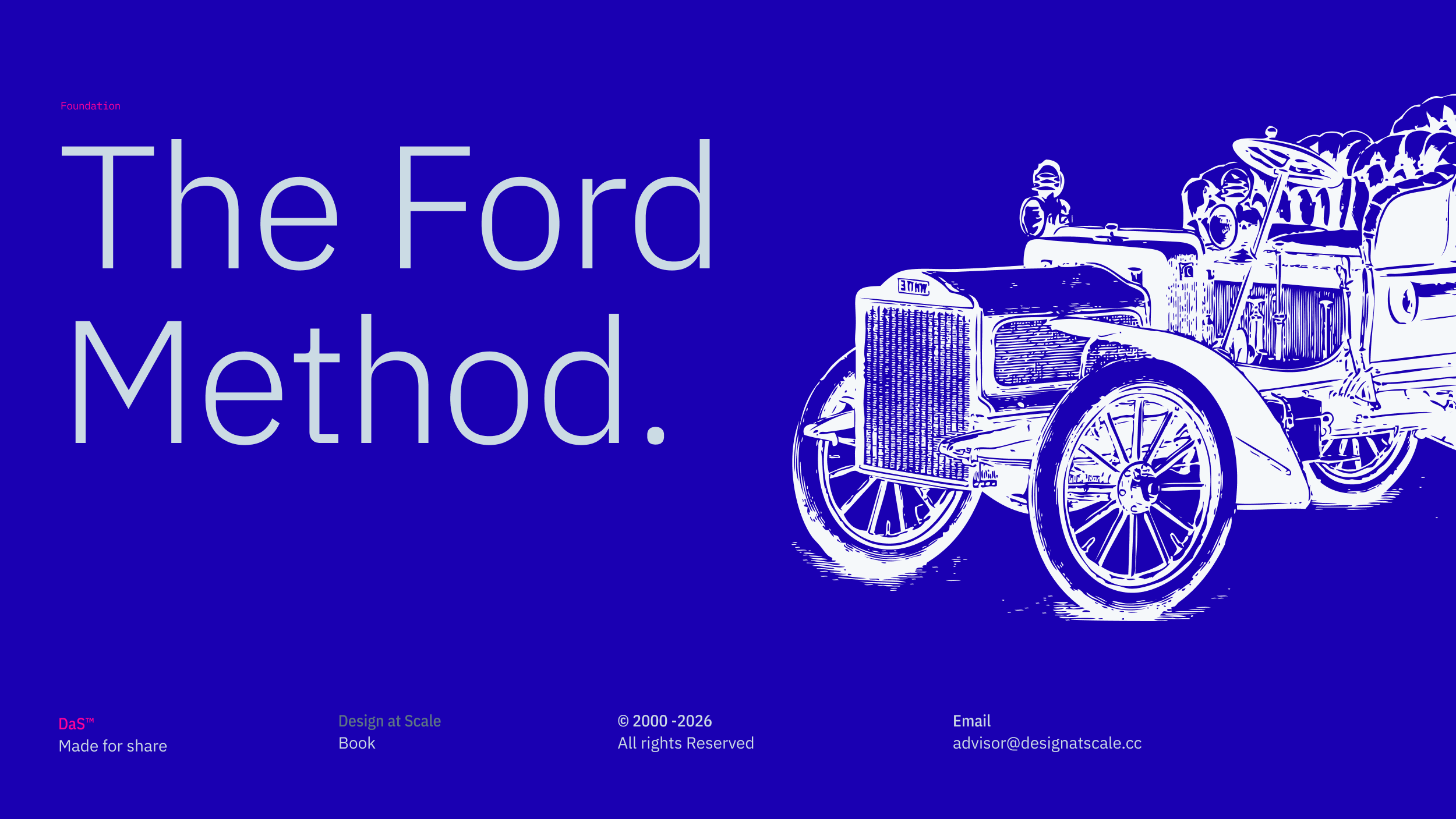
It’s a common misconception that Henry Ford invented the automobile.The reality is, he didn’t.
What he did invent was scale, however.
Ford’s true genius wasn’t in the car itself. It was in how he reimagined the way cars were made. He transformed a workshop craft into an industrial system. He didn’t just build a product; he built a process.
The core of that transformation was the moving assembly line.
Before Ford, cars were made by small teams of mechanics who moved from one station to another, assembling parts by hand. Production was slow, expensive, and inconsistent. Ford flipped that model on its head. Instead of moving the workers, he moved the product.
At first, it was a simple rope that dragged the chassis down the line. Later, it became a continuous chain - mechanical, reliable, and unstoppable. The line set both direction and pace, and for the first time, everyone could see the work in motion.
The impact was immediate.
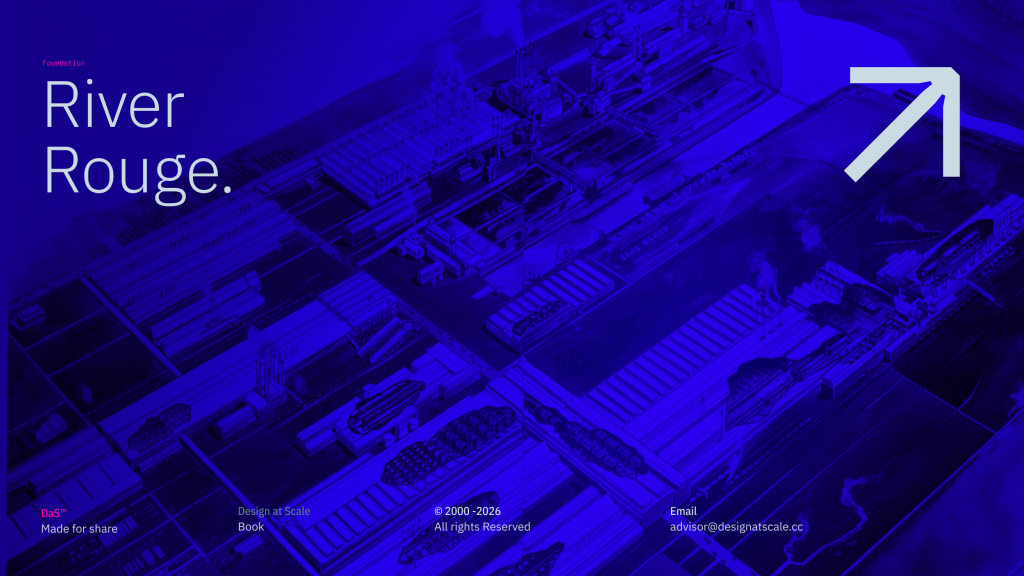
At the Highland Park plant, where the Model T was born, Ford’s system raised output from hundreds of cars a day to thousands. Assembly time fell from twelve and a half hours to just one and a half. The process became predictable, measurable, and astonishingly efficient.
The economics followed.
The Model T launched in 1908 at £850. By 1914, it cost £490. A decade later, just £260.
By May 1927, Ford had sold more than fifteen million Model Ts, making it the best-selling car on the planet.
But innovation, as always, came with a price.
The new process was efficient but dehumanising. Work became narrow, repetitive, and mechanical. Skilled craftsmen - once responsible for entire systems - were now limited to a single motion repeated hundreds of times a day. Many left for competitors who still valued versatility over volume.
The line didn’t just move cars; it moved people out.
And when efficiency overtakes humanity, morale collapses. Workers burned out, quality slipped, and the promise of progress began to show cracks.
Ford’s solution was as radical as his problem: he doubled wages.
In 1914, he introduced the famous £5 workday - a combination of profit sharing and higher pay designed to stabilise the workforce. Critics called it reckless. Economists predicted disaster. Instead, it became one of the most brilliant moves in industrial history.
Workers flocked to Detroit. Productivity soared. Absenteeism plummeted. For the first time, Ford’s employees could afford the very cars they built. The system began to sustain itself: production fed consumption, consumption fed loyalty, and loyalty fed scale.
But the deeper lesson wasn’t just economic - it was human.
The Ford Model proved that efficiency can drive transformation, but only when balanced with fairness. Systems must serve people, not replace them.
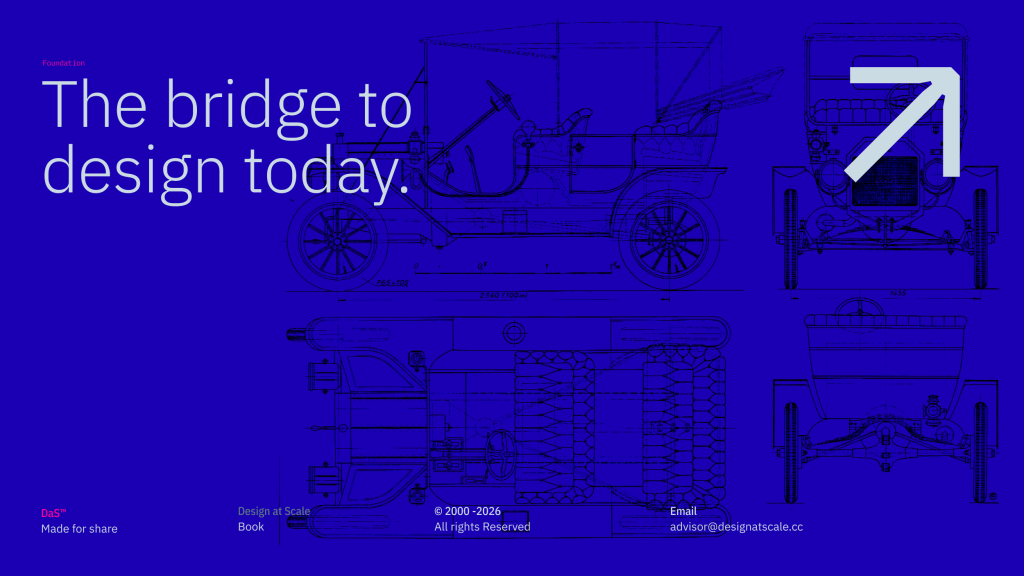
And that’s the bridge to design today.
Modern design teams often fall into the same trap. We chase speed - more screens, faster sprints, tighter deadlines - while forgetting that process without meaning is just repetition at scale.
Tools like Figma or Jira are our new conveyor belts. They create rhythm, but they can also create blindness. When the workflow becomes the goal, creativity becomes mechanical. Designers lose sight of impact because they’re too busy keeping pace.
That’s why understanding Ford’s model still matters.
It’s not about copying industrial systems. It’s about learning from their consequences. The challenge for designers isn’t just to move faster, but to ensure that speed doesn’t erase intent.
Ford’s success wasn’t luck. It was the result of structured thinking applied to chaos. But his real breakthrough came when he realised that process alone wasn’t enough - that people, not parts, powered the machine.
In Design at Scale™, that’s the lesson we inherit.
Systems matter. Process matters. But people - the thinkers, makers, and shapers - matter most.
Because in the end, progress isn’t about how fast the line moves. It’s about whether we’re still proud of what comes off it.